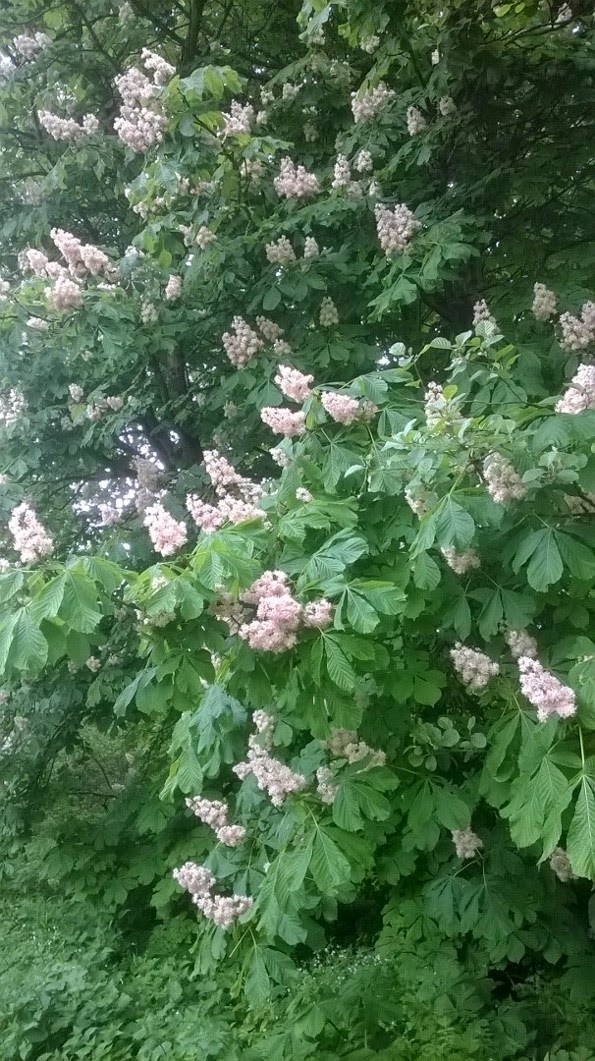
Much of the urban north-east of England was developed alongside the Industrial Revolution. Railways and coal mines were the major employers of the average bloke. Our street is a "railway street". Houses for the engine drivers down one side and the stokers down the other. The manager and deputy had larger three storey houses at this end of the terraces. Colliery towns were similar.
One of the pitman painters from Spennymoor was called Norman Cornish. He died this year. This is Bishop's Close, Spennymoor...a railway and coal town...painted by Norman.
 At the end of the road are the railway wagons carrying the coal from the colliery. It looks very similar to our street. The railways tended to have a generic architectural style.
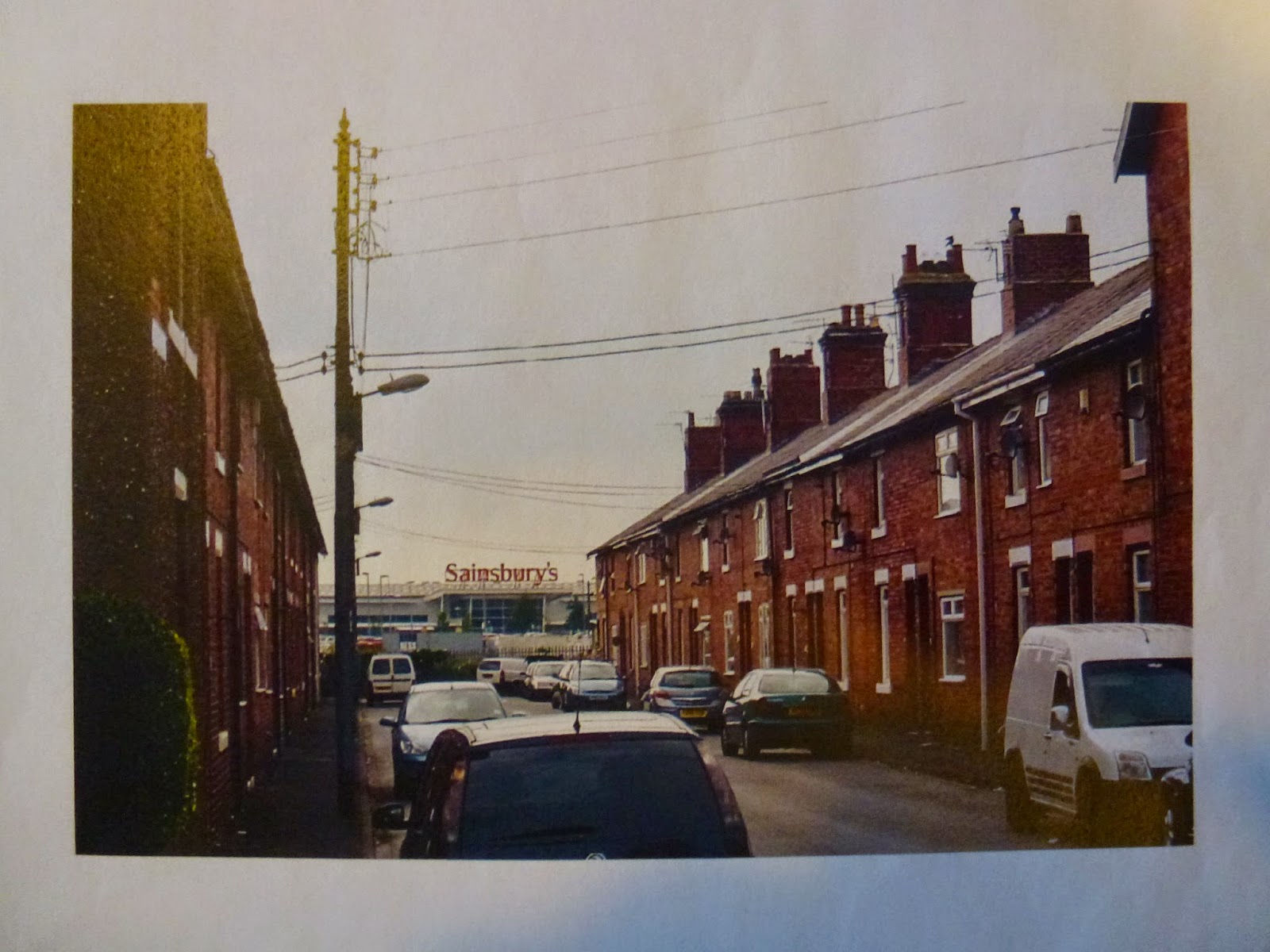
 The photo was flipped and traced and...
 dry point etched onto an acetate sheet which was inked and printed down at the Bishop Auckland Townhall using the Tom McGuinness (another pitman painter) press.
I left out the cars and there were no people about which simplified things.
I watercoloured the first print.
 It worked quite well so I printed another and developed a snow scene on it.
 This has become our xmas card for this year. It went off to the printers up the road. They "enhanced" the colour a bit and brightened it up....
 People up and down the street love it and so do I but of course our own house is not in it. It is behind the hedge on the front left.
So I wish you all a merry xmas. The snow is supposedly on its way and the temperatures are dropping so the street may soon look just like this.
Cheers Gillian
One of the pitman painters from Spennymoor was called Norman Cornish. He died this year. This is Bishop's Close, Spennymoor...a railway and coal town...painted by Norman.
The railways and collieries are long gone from the end of our street and the wasteland has recently been developed into a shopping centre. But I felt that I could recreate a winter scene.
I left out the cars and there were no people about which simplified things.
I watercoloured the first print.
So I wish you all a merry xmas. The snow is supposedly on its way and the temperatures are dropping so the street may soon look just like this.
Cheers Gillian